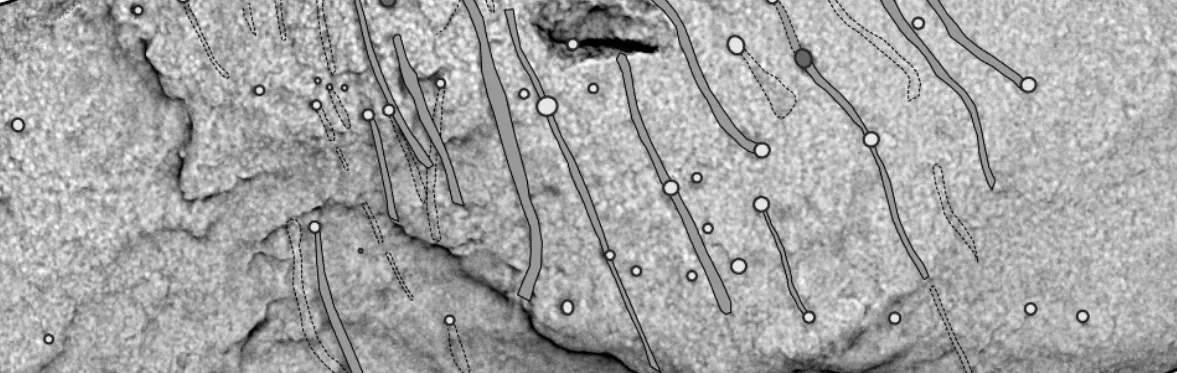
High-resolution 3D scanning and interpretative surface analysis for archaeology and heritage
I provide 3D scanning, photogrammetry and surface enhancement for archaeologists, museums, archives and heritage organisations.
This is not just about producing a model for display. High-resolution 3D recording can reveal details that are difficult to study clearly with the naked eye alone, including tool marks, wear marks, shallow carving and faint inscriptions. Used well, it helps us learn more about an object or monument, and learn from it.
I work with objects, carved stones, sculpture, inscriptions, monuments and other complex heritage material, creating digital records and interpretative imagery that support research, publication, conservation and public engagement.
See more in difficult surfaces
Some of the most important evidence on an object or monument is the hardest to see.
A surface may be worn, weathered, damaged or uneven. An inscription may survive only as slight traces. Carving may be too shallow to read confidently in ordinary light. In these situations, high-resolution 3D scanning and surface enhancement can make subtle details easier to examine, compare and interpret.
That is where much of my work sits: looking carefully at difficult surfaces, testing what becomes clearer through digital methods, and producing imagery that helps researchers, curators and heritage professionals assess what is really there.
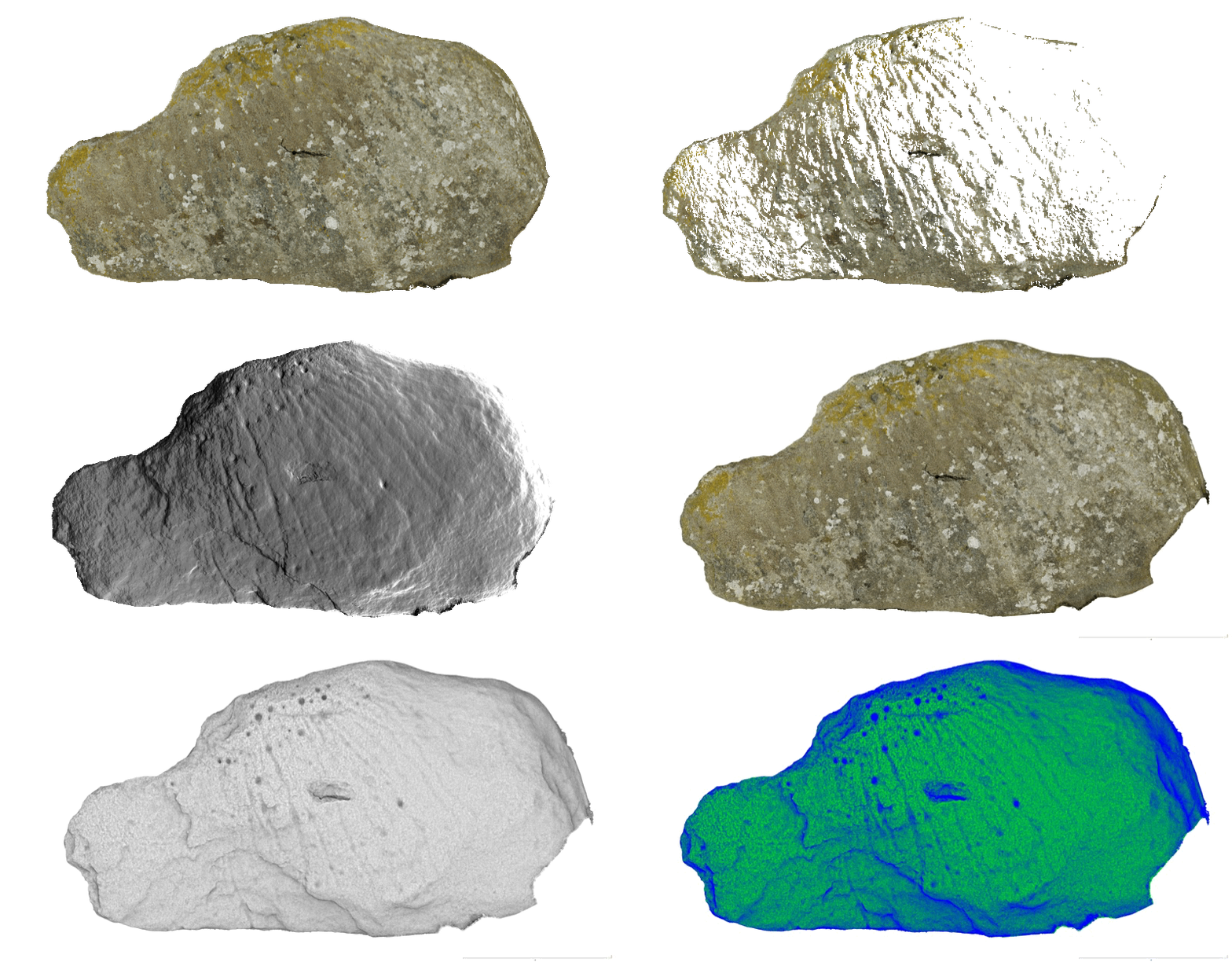
3D scanning with a research purpose
I offer 3D scanning and photogrammetry for a wide range of heritage material, from smaller artefacts to carved architectural fragments and larger monuments.
For some projects, the main priority is accurate recording. For others, the real value lies in what the data allows us to see more clearly afterwards. Often it is both.
The point is not simply to create a visually impressive model. It is to produce a digital record that can be used to investigate form, surface, condition and detail in a more rigorous way.
What high-resolution scanning can help reveal
High-resolution 3D recording can help bring out:
- tool marks
- wear marks
- faint inscriptions
- shallow carving
- subtle modelling and relief
- traces of working, reuse or damage
- details that become clearer through enhanced and interpretative imagery
This kind of work is especially useful when the surface itself is an important source of evidence.
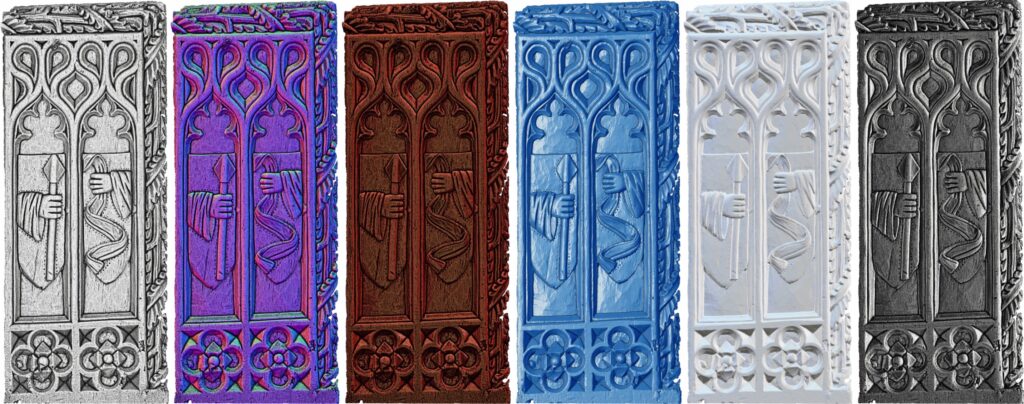
Interpretative surface analysis
A large part of what I do is interpretative.
I use 3D data, photography and surface enhancement methods to analyse object and monument surfaces carefully, looking for meaningful detail and testing possible readings. That might involve comparing different visualisations, isolating small changes in relief, examining marks from different angles, or producing supporting imagery that makes a difficult surface easier to discuss.
This is not about exaggerating the evidence or forcing a conclusion. It is about close analysis, careful judgement and creating images that support better interpretation.
For many projects, that interpretative work matters just as much as the original scan.
Supporting and interpretative imagery
The outputs from this kind of work are often central to the project.
I produce supporting and interpretative imagery for research teams, curators, publications and heritage projects. Depending on the material and the question being asked, that may include enhanced renders, filtered views, comparative images, annotated figures and other forms of working imagery that help subtle surface detail become clearer and easier to assess.
These outputs are important because they help other people study the material as well, not just view the model.
More than a standard scanning service
What makes this work distinctive is not only the equipment or software. It is the experience behind the method.
Over many years I have developed custom ways of approaching difficult objects and surfaces, built through solving problems across hundreds of varied artefacts, monuments and carved stones. Different materials behave differently. Different questions require different forms of recording and analysis. I do not apply a standard workflow where a more careful, object-led approach is needed.
That experience helps me decide how to record a surface, how to examine it afterwards, and how to produce outputs that are genuinely useful. In some cases, this kind of work can help lead to important new observations or discoveries.
What I can help with
3D scanning and photogrammetry
High-resolution digital recording of objects, carved surfaces, inscriptions, sculpture and monuments.
Surface enhancement
Digital visualisation and enhancement of worn, shallow or hard-to-read detail.
Interpretative analysis
Close examination of difficult surfaces using 3D data and image-based methods.
Supporting imagery
Images for analysis, publication, reports, exhibitions and collaborative discussion.
Existing datasets
Reworking and reassessing photographs, RTI captures and 3D models that already exist.
Research-led collaboration
Projects where recording, analysis and interpretation need to inform one another.
A good fit for this service
This service is particularly relevant if you need:
- 3D scanning of heritage objects or monuments
- photogrammetry of carved, inscribed or complex material
- help examining subtle or ambiguous surface detail
- clearer imagery for research or publication
- interpretative analysis based on high-resolution 3D data
- a collaborator who can connect digital recording with archaeological understanding
What you receive
Depending on the project, I can provide:
- high-quality 3D models
- enhanced surface images
- annotated and interpretative figures
- working images for research teams
- publication-ready illustrations
- technical notes and documented workflows
- digital outputs suitable for archive and future reuse
Why this matters
Good 3D recording is not only a way of documenting heritage. It can also be a way of asking better questions of the material.
When done carefully, high-resolution scanning and surface enhancement can reveal details that change how an object is understood, clarify features that were previously uncertain, and create a stronger basis for interpretation. That is why I see this work not as a presentation service, but as part of the research process itself.
Let’s discuss your project
If you need 3D scanning for an object, monument or heritage collection, or you are trying to understand a surface that is difficult to read, I’d be glad to hear about it.
I can help with new recording, reworking existing datasets, and producing supporting or interpretative imagery that gives your project more than just a model.
Get in touch to discuss your object, surface or research question, and the kind of output you need.