Photogrammetry and digital surface enhancement helped resolve long-standing questions about some of the most significant early Christian monuments in Cornwall and Devon — and in more than one case, overturned interpretations that had stood for over a century.
The subject
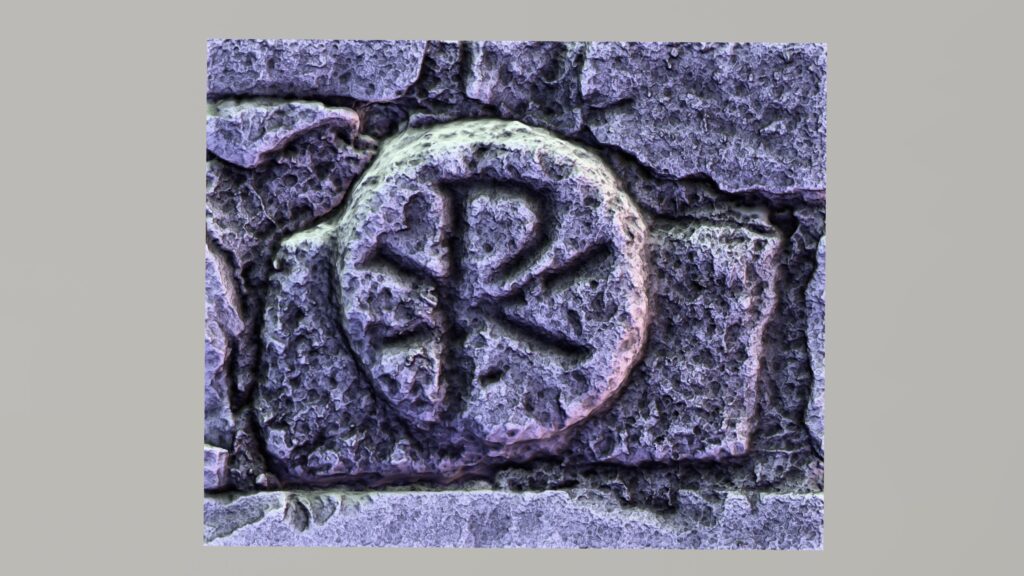
The chi-rho — the overlapping Greek letters ☧, monogramming the name of Christ — is one of the most powerful symbols of early Christianity. In Cornwall, a small group of inscribed memorial stones, mostly dated to the fifth and sixth centuries, carry versions of this symbol. They are exceptional finds: of the 56 early Christian inscribed memorial stones known in England, 37 are in Cornwall, and only a handful anywhere in Britain carry a chi-rho or its close relative, the tau-rho.
The tau-rho is a different symbol. Where the chi-rho abbreviates Christ’s name, the tau-rho is pictographic — the loop of the rho representing the leaning head of a crucified figure on a T-shaped cross. Though superficially similar, these two symbols carry distinct meanings. For decades, both had been recorded under the single label ‘chi-rho’ in the Cornwall Historic Environment Record and in Scheduled Monument descriptions. The question of whether that label was always accurate had never been systematically addressed.
This project, commissioned by the Cornwall HER and led by Ann Preston-Jones and Andrew Langdon, set out to resolve that question. My role was to record six of the target monuments using close-range photogrammetry and digital surface enhancement, and to contribute a separate technical report.
The challenge
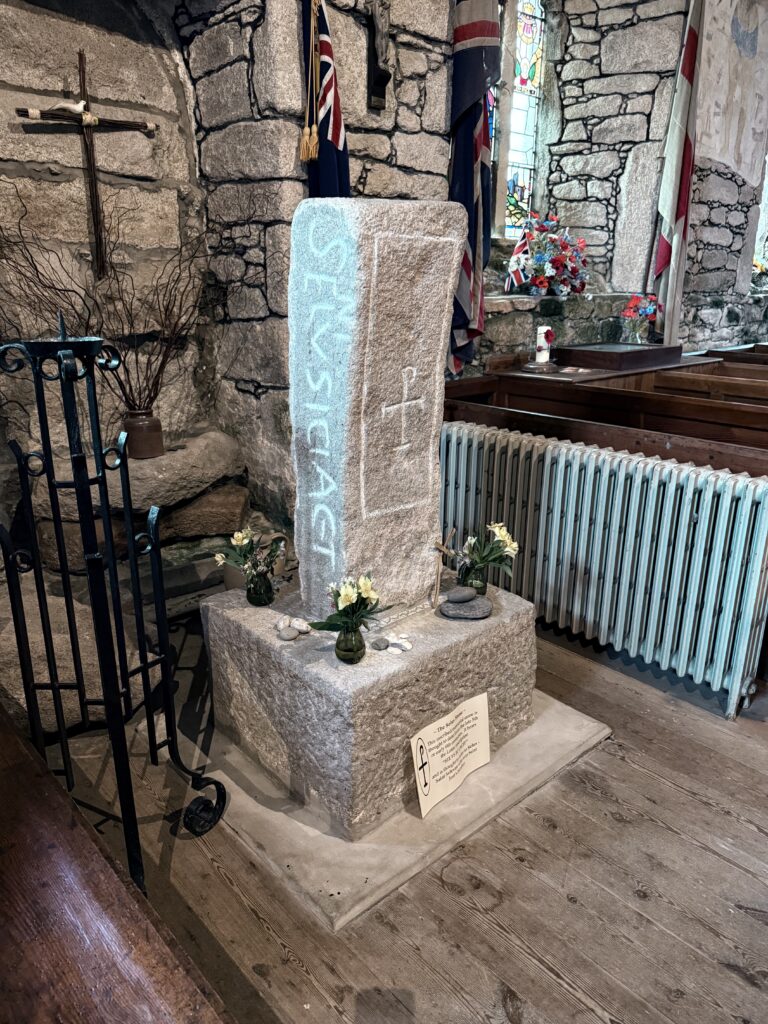
Several of these stones are difficult objects. Inscribed in granite, exposed to centuries of weathering, repeatedly moved, built into walls, some had been chalked in by well-meaning visitors, obscuring the original surface. One is set nearly four metres up in a church gable. The interpretation of several symbols had been contested since the nineteenth century, with different antiquarians producing incompatible readings. In at least one case — the alleged tau-rho on the Sourton Down cross in Devon — a symbol had been accepted in the literature for well over a century without anyone quite agreeing on what it looked like.
What I did
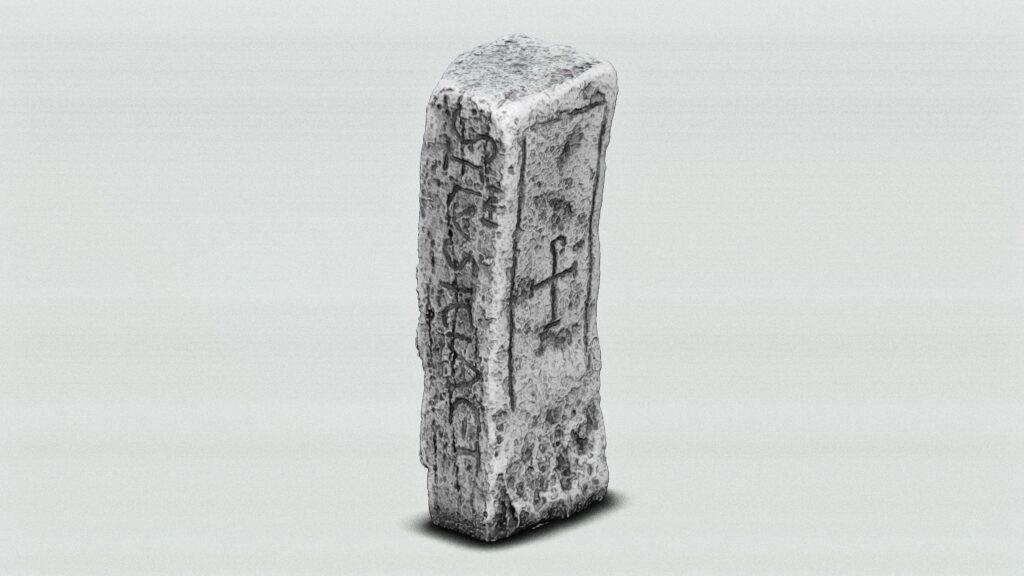
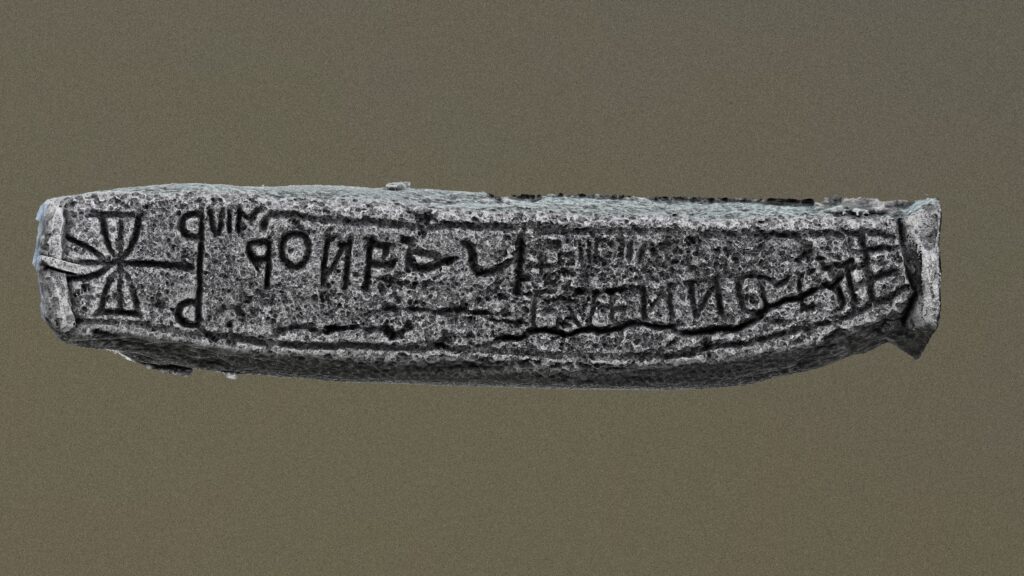
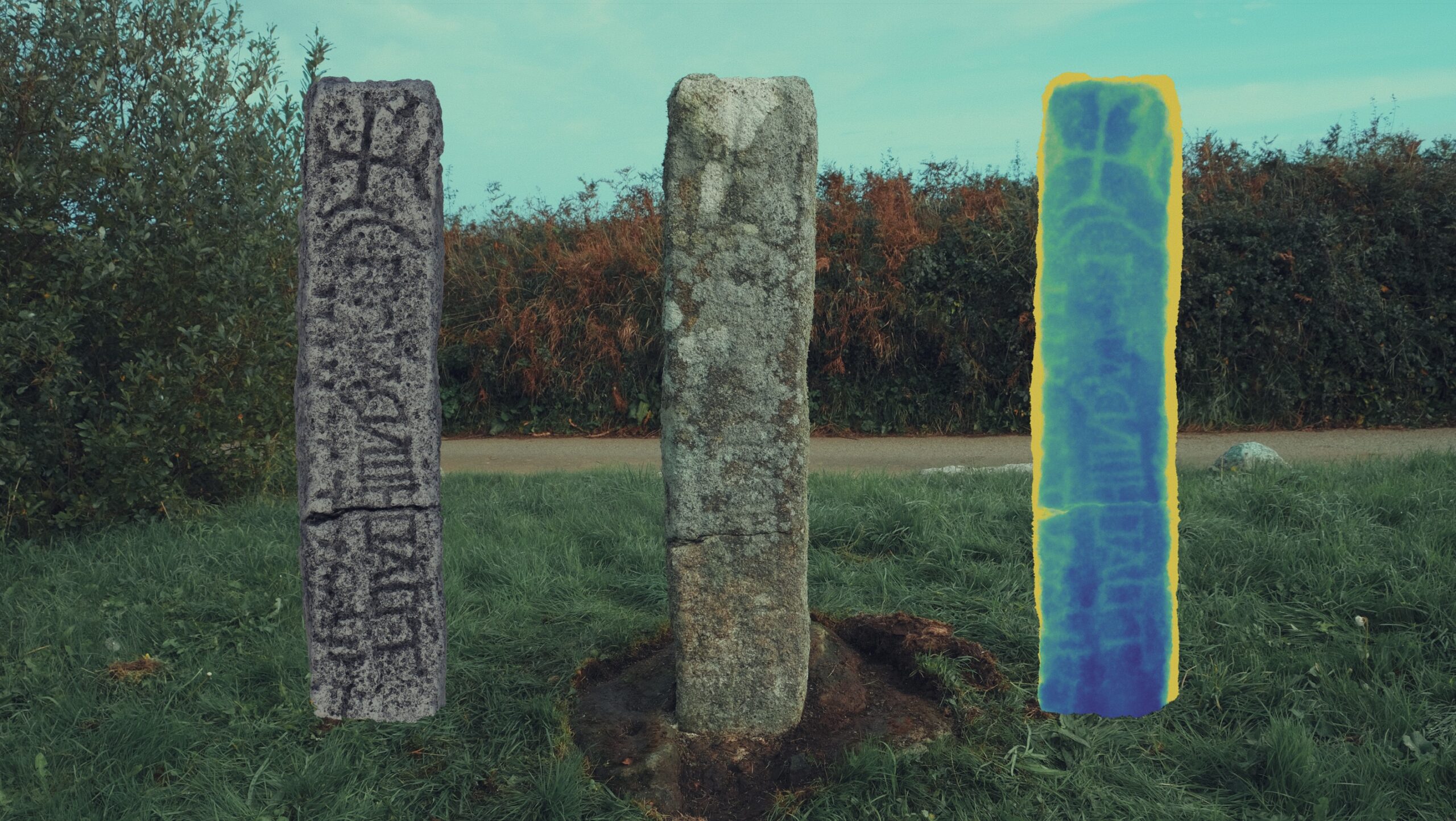
I recorded the six monuments using high-resolution photogrammetry, generating dense 3D surface models detailed enough to resolve individual crystal components in the granite. Two digital enhancement techniques were then applied: Ambient Occlusion, which simulates the way light is obstructed in crevices to deepen the apparent relief of incised marks; and depth shading, which maps variations in surface height. Both methods reveal features that conventional photography misses, regardless of lighting conditions on the day.
What became clearer
The results varied by site — sometimes confirming existing interpretations, sometimes overturning them.
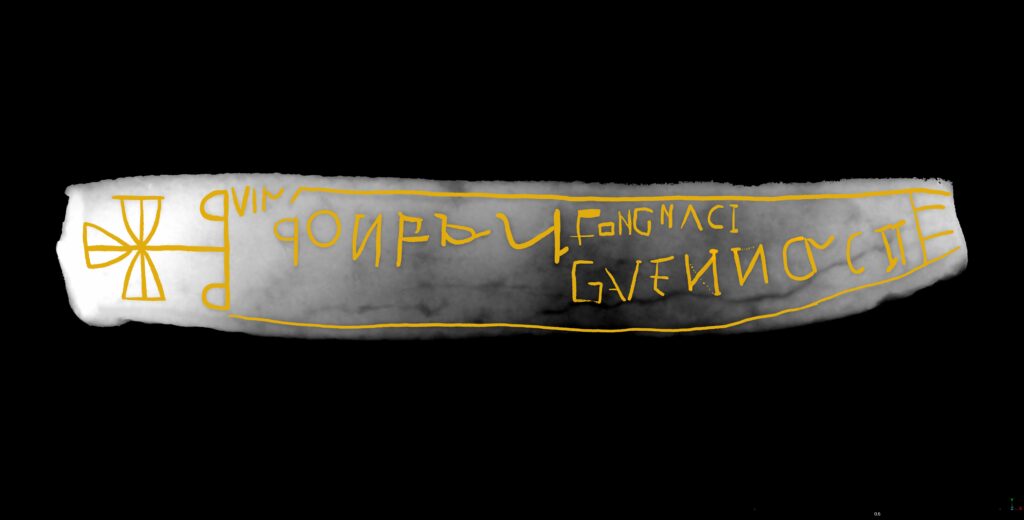
St Just had long been described as carrying a chi-rho. The photogrammetry confirmed it is a tau-rho, and clarified that the inscription on the adjacent face of the stone was added after it had already been partly set in the ground — evidence of two distinct phases of use, with the tau-rho as the primary feature.
Madron had been assumed to carry a chi-rho. The recording showed it carries neither: instead, an unusual petal-like cross with no close parallel in the British Isles. Significant variation in the depth and quality of different sections of the inscription also pointed to the stone having been worked in more than one phase.
Phillack carries what is probably the finest chi-rho in Cornwall, set in a raised roundel in the gable of the church south porch. The symbol was confirmed as a genuine chi-rho, though the sharpness of the carving leaves open the possibility it was re-cut at some point.
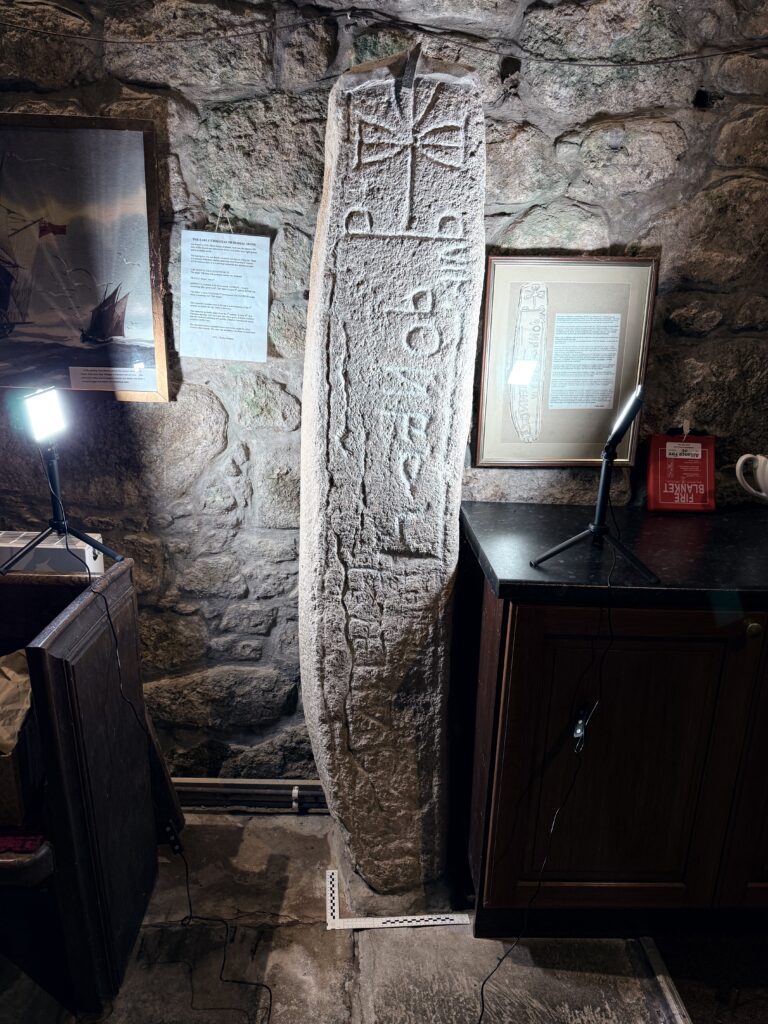
Long Cross, St Endellion carries a tau-rho, not a chi-rho. Because the top of the stone is eroded, the rho’s hook was uncertain to the naked eye; the 3D model helped verify its existence and position. The recording also clarified a low-relief cross on the reverse face, consistent with the stone’s later reuse as a medieval wayside cross.
South Hill carries a tau-rho above the inscription, but more lightly incised than the lettering below — consistent with the symbol having been added in an earlier, separate phase, perhaps marking what had previously been a standing stone.
Sourton Down had been recorded as carrying a possible tau-rho since the nineteenth century, with two incompatible published drawings from different scholars. The photogrammetry resolved the disagreement: the marks are accidental scratches, probably accumulated during the stone’s various moves and repositionings over the centuries. Sourton is not a tau-rho stone.
Why it mattered
The 3D datasets now provide a reliable baseline for monitoring future weathering or damage — particularly valuable for outdoor stones and vulnerable inscriptions. But the more immediate contribution was interpretive.
In three cases, digital surface analysis supported the identification of phasing: evidence that symbols and inscriptions were added in separate episodes, by different hands, sometimes with different intentions. This kind of sequencing is almost impossible to establish from rubbings or conventional photographs.
The Sourton result shows that digital recording can definitively rule out a purported symbol, not just confirm one. Decades of literature had treated the Sourton tau-rho as uncertain but possible. It can now be set aside.
More broadly, the project enabled a necessary correction to the record. Of the Cornish stones examined, only Phillack carries a genuine chi-rho. St Just, Long Cross, and South Hill carry tau-rhos — symbols with a distinct origin and meaning. Getting that distinction right matters for how these monuments are understood, described in national heritage records, and positioned within the wider story of early Christianity in south-west Britain.
The official entries for these monuments have been updated and use my imagery as illustrations.
Collaborators: Ann Preston-Jones FSA and Andrew Langdon FSA
Commissioned by: Cornwall Historic Environment Record
Year: 2025
If you are working on early medieval inscribed stones, church monuments, or heritage recording projects requiring high-resolution photogrammetry and digital surface enhancement, get in touch to discuss how I can contribute.
Gallery