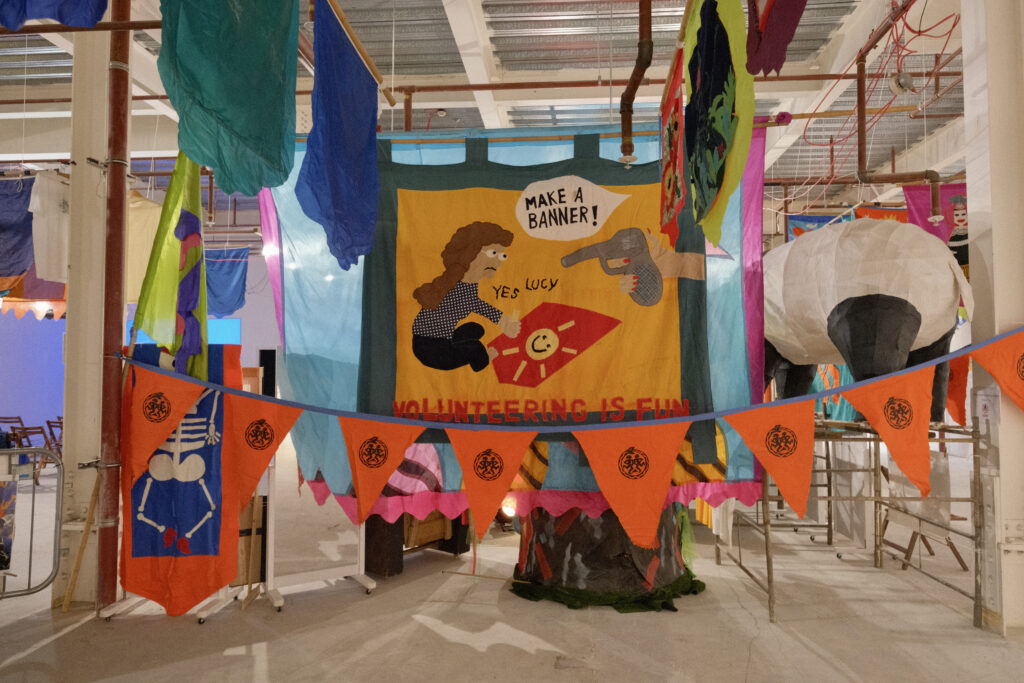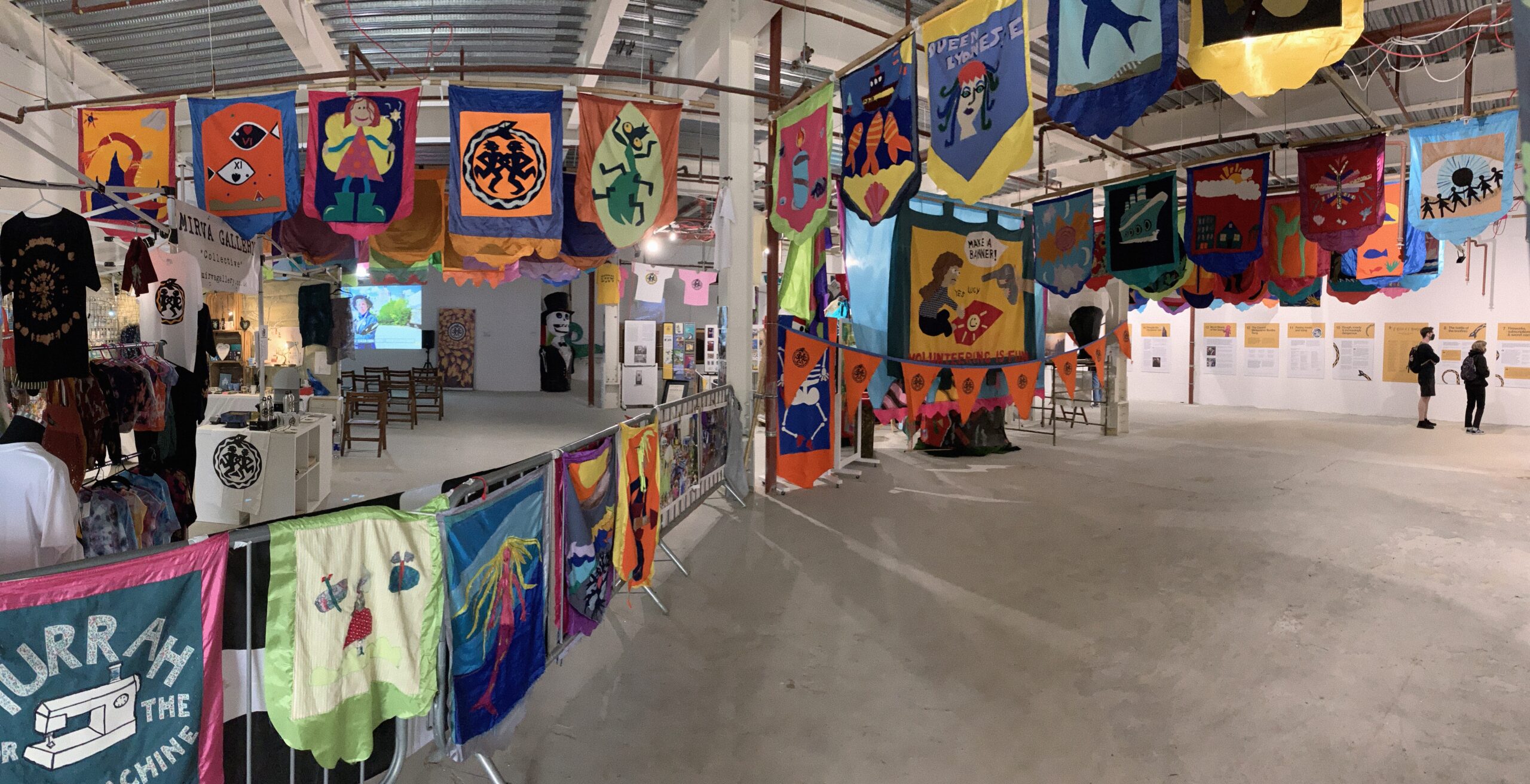
Research, interpretation and exhibition design for Golowan Festival CIC, creating a large-scale public exhibition when the festival itself could not take place.
In 2021, Golowan Festival CIC faced an unusual and difficult situation. The festival could not take place in its usual form due to Covid restrictions, just as it approached its 30th anniversary.
Rather than let the moment pass, the team decided to create something ambitious for the people of Penzance. They wanted a public experience that could carry some of Golowan’s spirit, colour and meaning through a difficult period, and offer a sense of continuity and hope.
They chose to create a large-scale exhibition in the town itself, drawing together the history of Golowan and the energy of the modern festival. I was asked to deliver it, and I helped shape every aspect of the project from initial concept through to delivery.
Golowan is not simply a modern event. It is rooted in much older midsummer customs, once widely celebrated across Penzance with bonfires, processions, music and fairs. These traditions faded in the late 19th century before being revived in 1991. The exhibition needed to hold all of this together: past and present, archive and living practice, at a moment when the festival itself was paused.
The challenge
The project required a complete rethinking of how Golowan could be experienced.
The historical story was complex and not widely understood in detail. It had to be researched properly and then shaped into something clear and engaging for a broad audience, without losing its richness.
At the same time, the exhibition needed to feel alive and recognisably Golowan. It could not simply be a sequence of panels. It had to carry the colour, movement and character of the festival into an indoor space.
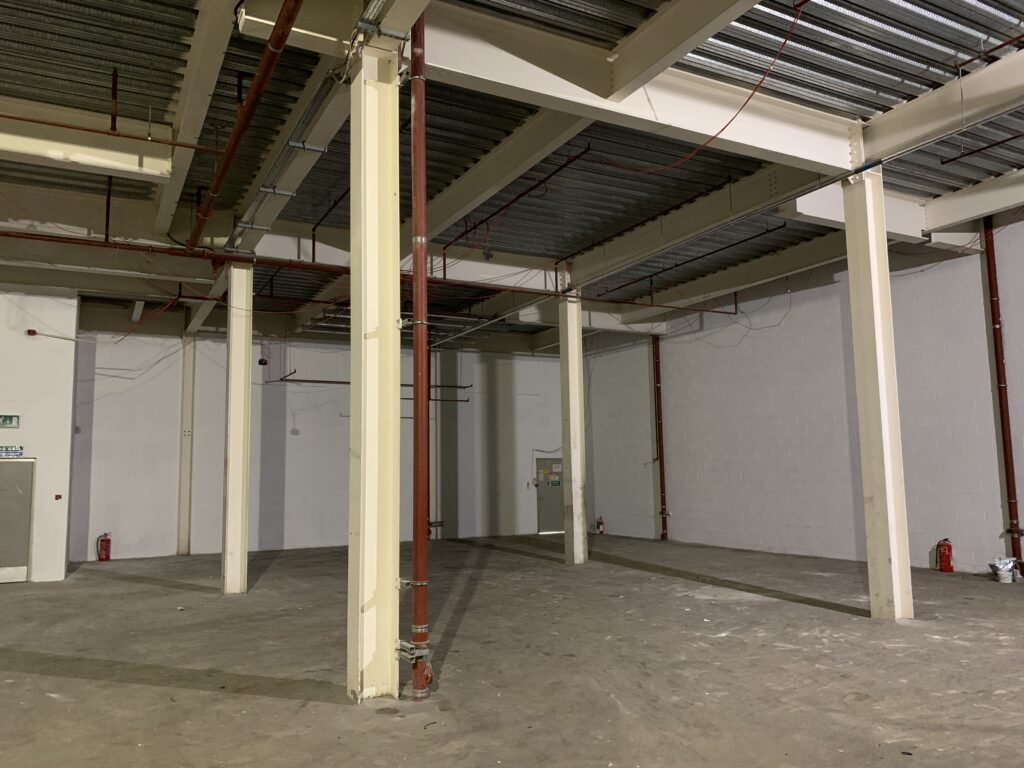
Practical constraints were equally demanding. The chosen venue, a recently vacated Argos shop, offered scale but little infrastructure. Power was limited, and the space needed to be transformed quickly into something coherent and inviting.
All of this had to work within Covid regulations, including restricted capacity and a clearly defined one-way visitor route.
What I did
I worked closely with Golowan Festival CIC to develop the project from the ground up, combining research, interpretation, design and delivery.
Research and interpretation
I carried out detailed historical research into Penzance’s midsummer traditions, drawing on early antiquarian accounts, 19th-century newspapers and later recollections. This material formed the backbone of the exhibition.
I wrote the full set of exhibition texts, producing around 20 panels. These were designed to be readable and engaging, while grounded in primary evidence. Carefully chosen quotations and descriptions helped bring past celebrations into view, from torchlit processions to the noise and danger of fireworks in the streets.
Exhibition design and curation
I helped identify and secure the venue, and designed the spatial layout to support both the narrative and Covid-safe visitor movement.
I selected and worked with designer Paul Betowski to develop a clear and consistent visual identity for the panels.
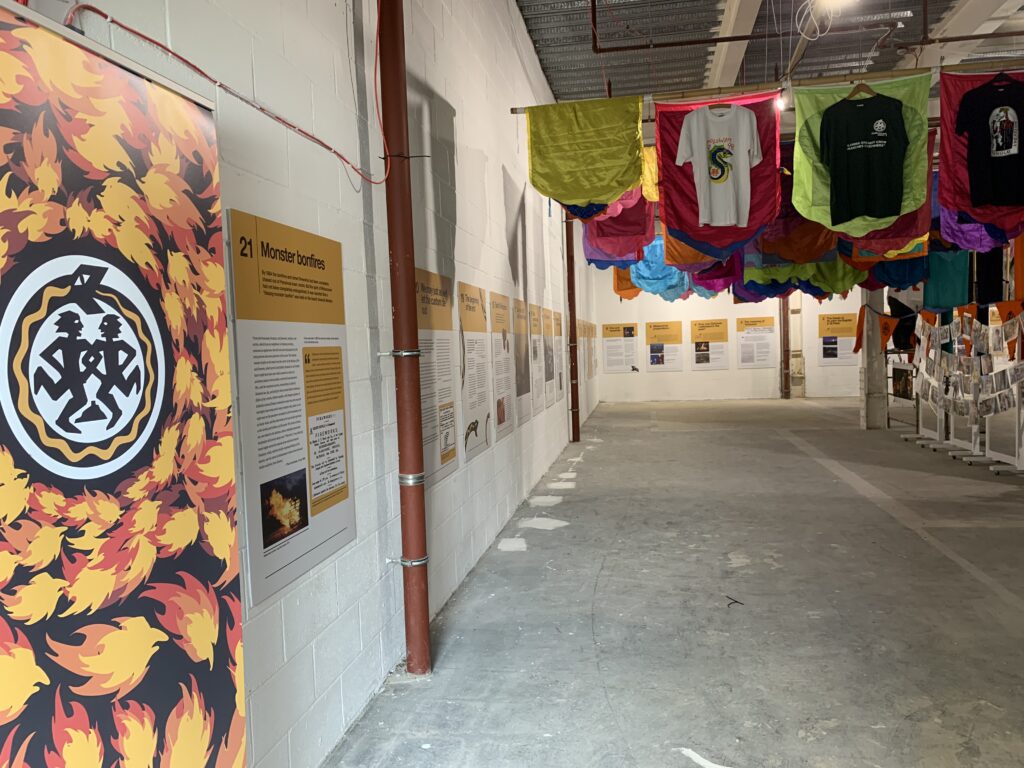
At the centre of the exhibition, I created a large-scale display of objects from the last 30 years of Golowan. This brought together banners, costumes and festival artefacts, making the recent history of the festival tangible and immediate.
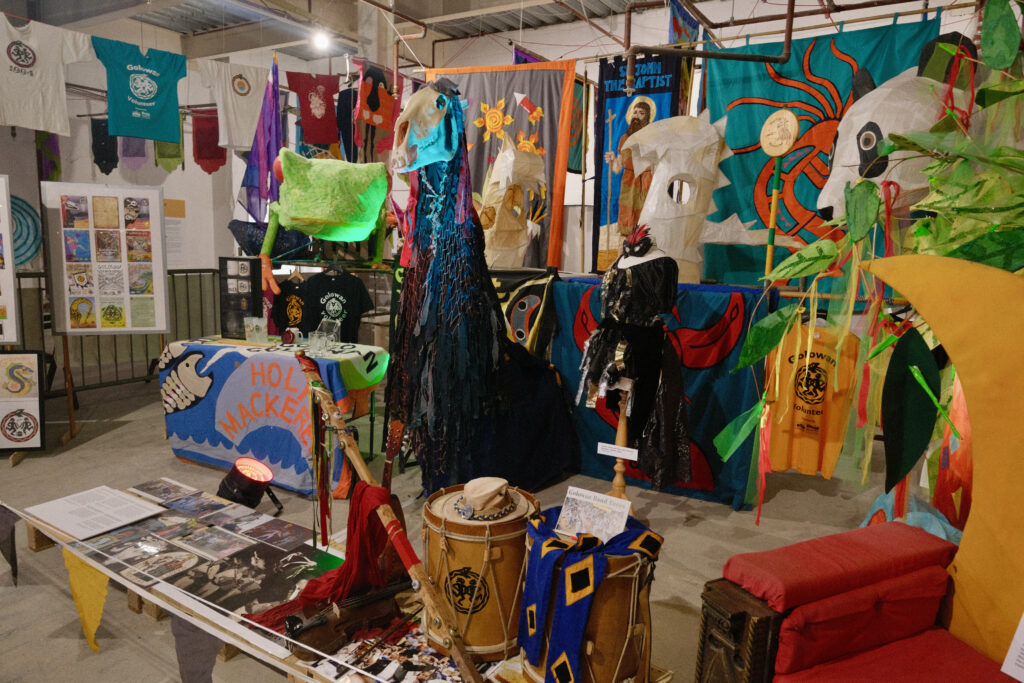
I also worked with the Golowan team to select and install their collection of hand-made banners and withy figures, suspending them across the space to create an immersive environment that echoed the visual impact of the festival itself.
Technical problem-solving
With limited electrical capacity in the building, I assisted with the design and installation of a low-energy LED lighting system. This ensured the exhibition could function effectively while working within strict constraints.
Public engagement
During the exhibition’s run, I gave talks to stakeholders and local representatives, including the Mayor, and spent time acting as a guide within the space, helping visitors engage with both the history and the exhibition itself.
What became clearer
The exhibition brought several important things into focus.
It showed that Golowan is not simply a revived festival but part of a longer cycle of tradition, decline and reinvention. The historical evidence reveals a culture that was once widespread, highly organised and, at times, unruly.
It also clarified the continuity between past and present. Elements such as fire, procession, performance and satire are not recent additions, but reworkings of older practices that have been adapted for modern audiences.
The role of community organisation became especially clear. The informal “secret committees” described in 19th-century accounts have strong parallels with the volunteer networks that sustain Golowan today.
By placing archival material alongside recent objects and imagery, the exhibition allowed visitors to see these connections directly, rather than treating the past as something distant or disconnected.
Why it mattered
At a moment when the festival itself could not take place, the exhibition created a different kind of shared experience.
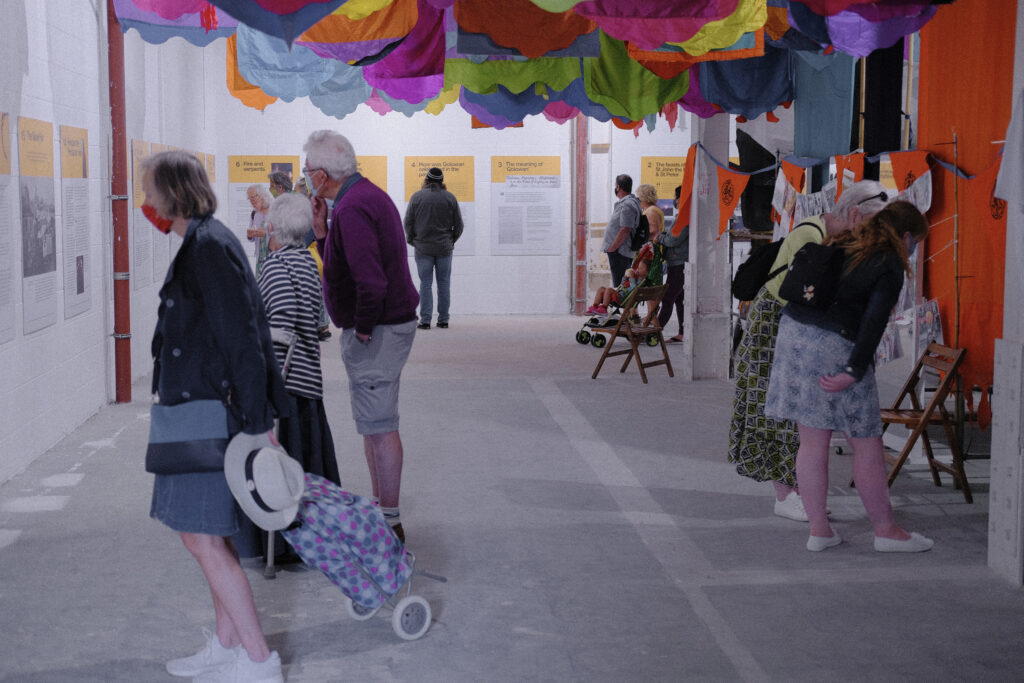
Over 2,000 people visited during its two-week run. For many, it offered a way to reconnect with Golowan during a period of disruption. For others, it provided a first real understanding of the depth and character of the festival’s history. This new knowledge of the real historical origins and stories of the festival’s origins has had a substantial impact on how the festival is perceived.
The project also created a lasting interpretative framework. The research and texts continue to support Golowan Festival CIC’s work, giving the organisation a clearer and more confident sense of its historical foundations.
More broadly, the project shows how careful research, combined with thoughtful design, can transform a temporary and unlikely space into something meaningful. A vacant retail unit became a place where people could encounter both the past and the present of a living tradition, and feel part of its future.