On a rather hot 32°C summer’s day in July 2026, I visited St Nonna’s Church in Altarnun on Bodmin Moor. I had long wanted to see its famous Tudor bench ends, particularly the carvings of musicians and dancers. As both a folky mandolin player and an archaeologist specialising in 3D scanning, this was an irresistible opportunity to bring my personal and professional interests together.
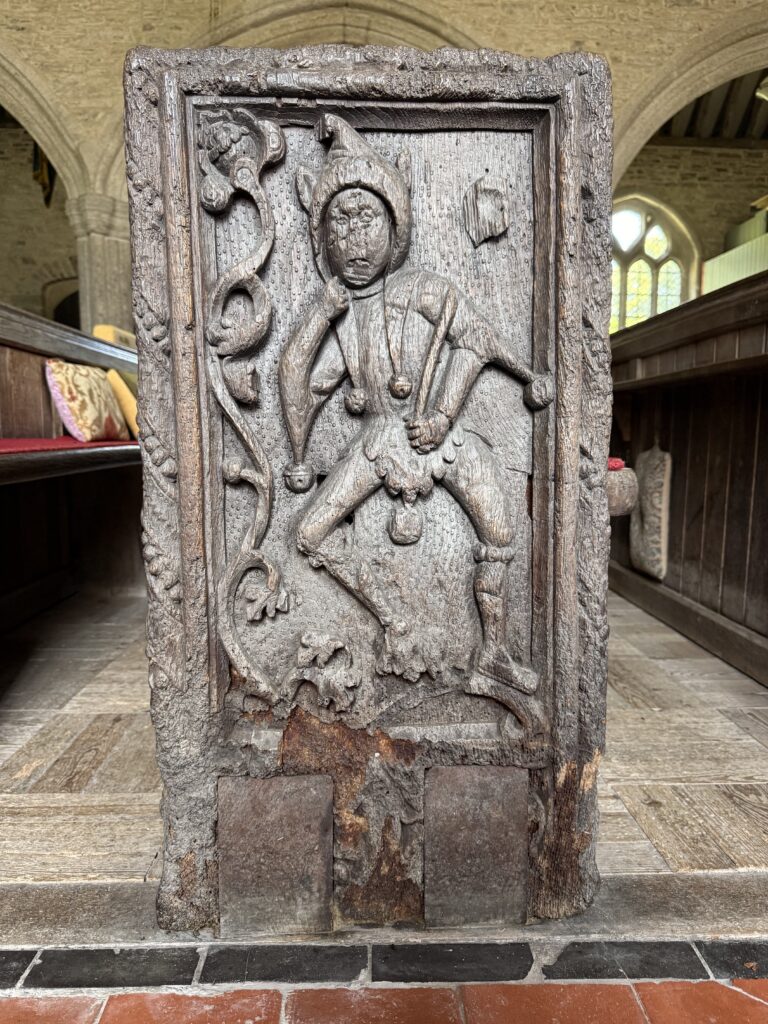
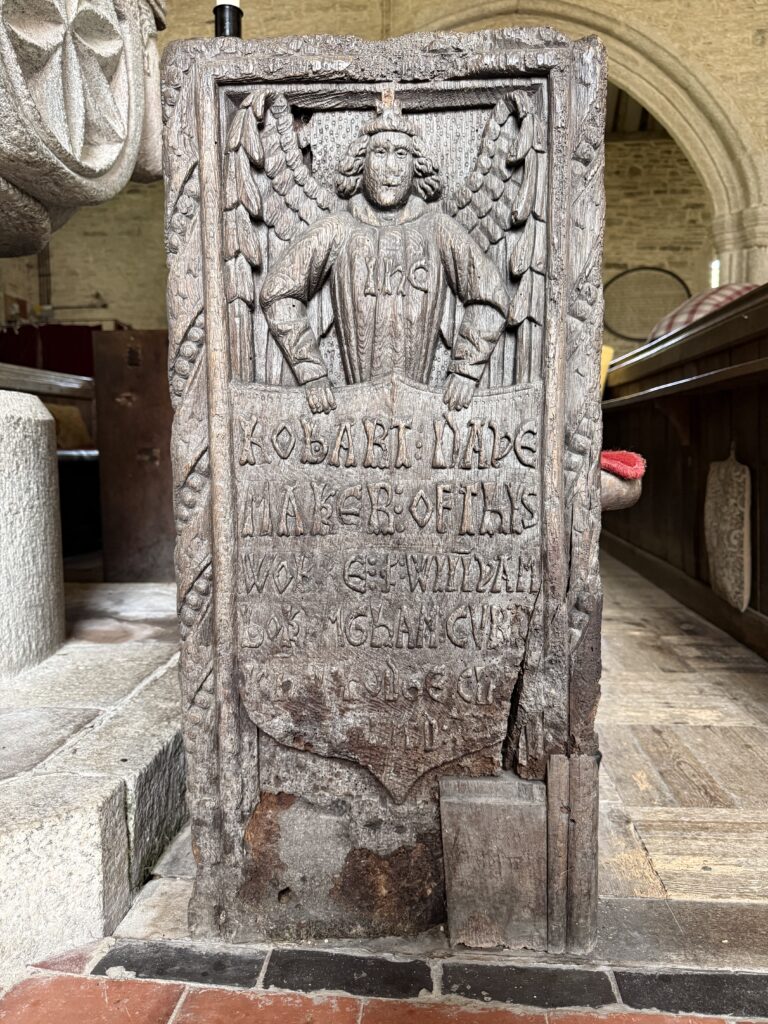
The bench ends were carved by Robert Daye sometime between 1510 and 1530 and depict a fabulous array of characters, grotesques and symbols.
Photogrammetry has in the past been my main method of 3D capture, and it continues to be in many cases. However, photographing dark objects (dark brown oak) in dark places (the corners of churches) can be challenging. A tripod, several lights, a battery pack, and lots of adjustments to the camera to get sharp low-noise photos can take a while. Then there’s the physicality of getting the camera low enough to the ground. It can be done, and I’ve done it many times, but it requires a fair bit of time, and it’s not something I’d want to do on a day out.
In the last year or so I have been experimenting with consumer-grade structured light 3D scanners. I had great success using a Revopoint Range scanner at a 0.3mm resolution in the past on a bench end at St Mawgan. That was a decent resolution, but this time I tried a new scanner capable of 0.1mm with a stated 0.05mm accuracy. For many archaeological applications, this is a decent resolution capable of recording some very fine details such as prominent wood grain, tool marks, and the fine features of carvings. Crucially, it produced excellent results when used handheld in dark or dim spaces. I could review the data inside the church to make sure that I had captured enough detail and from enough angles before leaving.
Results
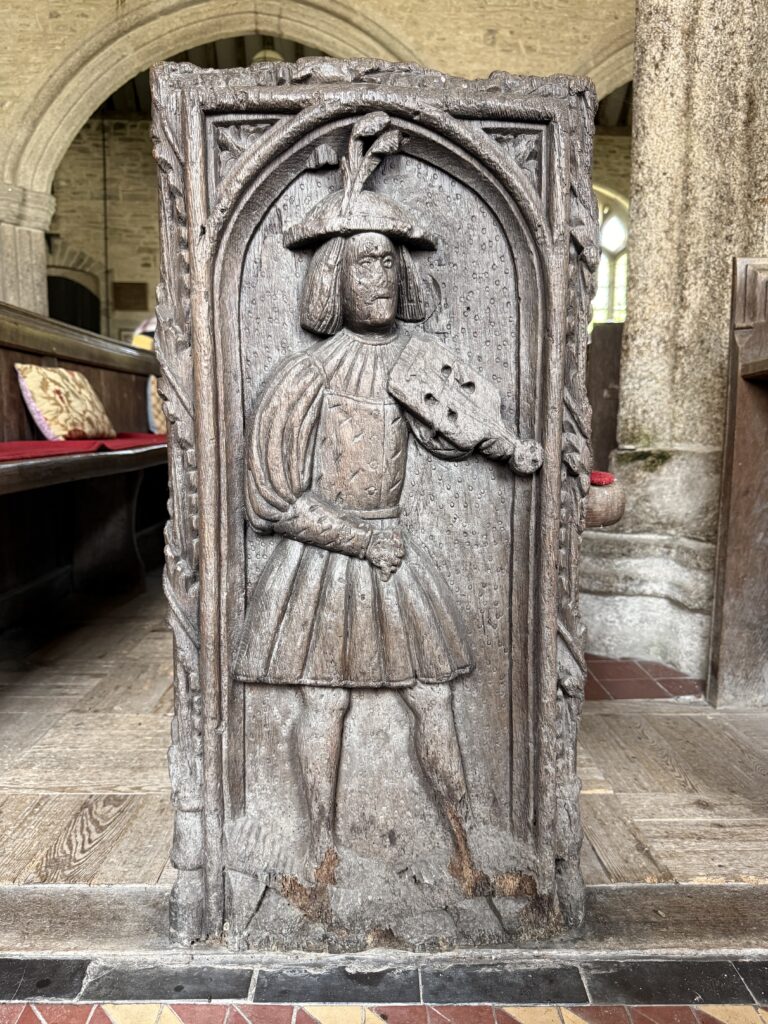
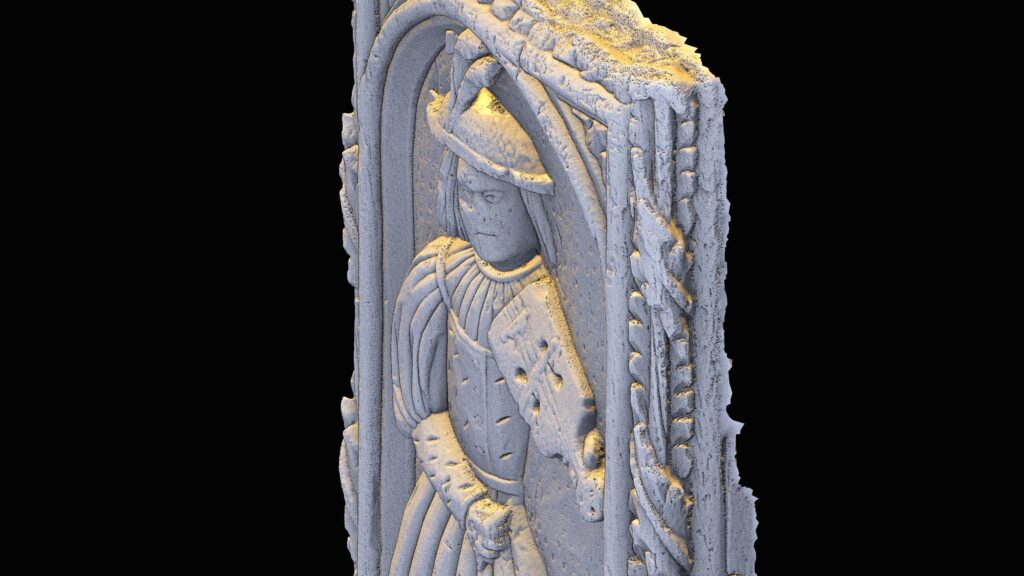
The first 3D scan shows the “Altarnun fiddler” playing their boxy three-string fiddle. The bow, once attached, has long since disappeared. The scan shows all of the detail clearly, and the filtering of the 3D surface has brought out the relief in the carving.

The 3D model can also be illuminated using virtual light sources, which can have their intensity, colour, and direction, controlled. This can create dramatic images which can be used to highlight different details or demonstrate the artistry of a piece.

In this next image, the fiddle player looks right at us and we can see the detail and wobbly strings of their fiddle.
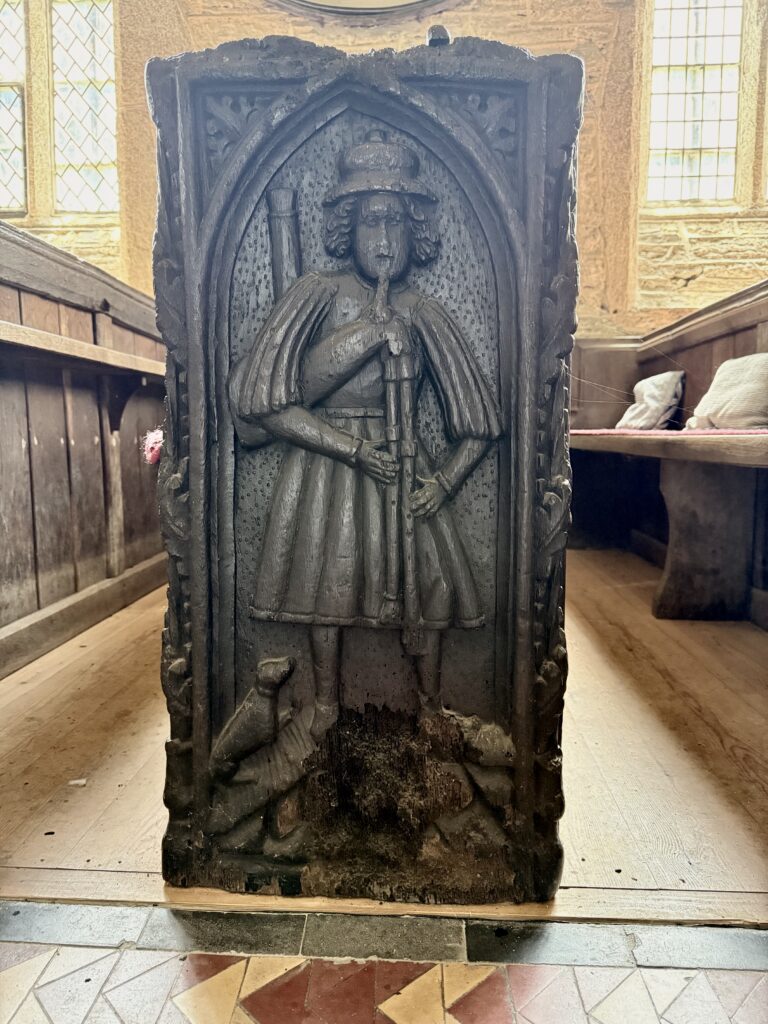
Then we have the famous Altarnun piper. Some suggest that they are a shepherd as well as a piper, due to traditional associations between the two and the proximity of this bench end to the one next to it covered with carvings of sheep.
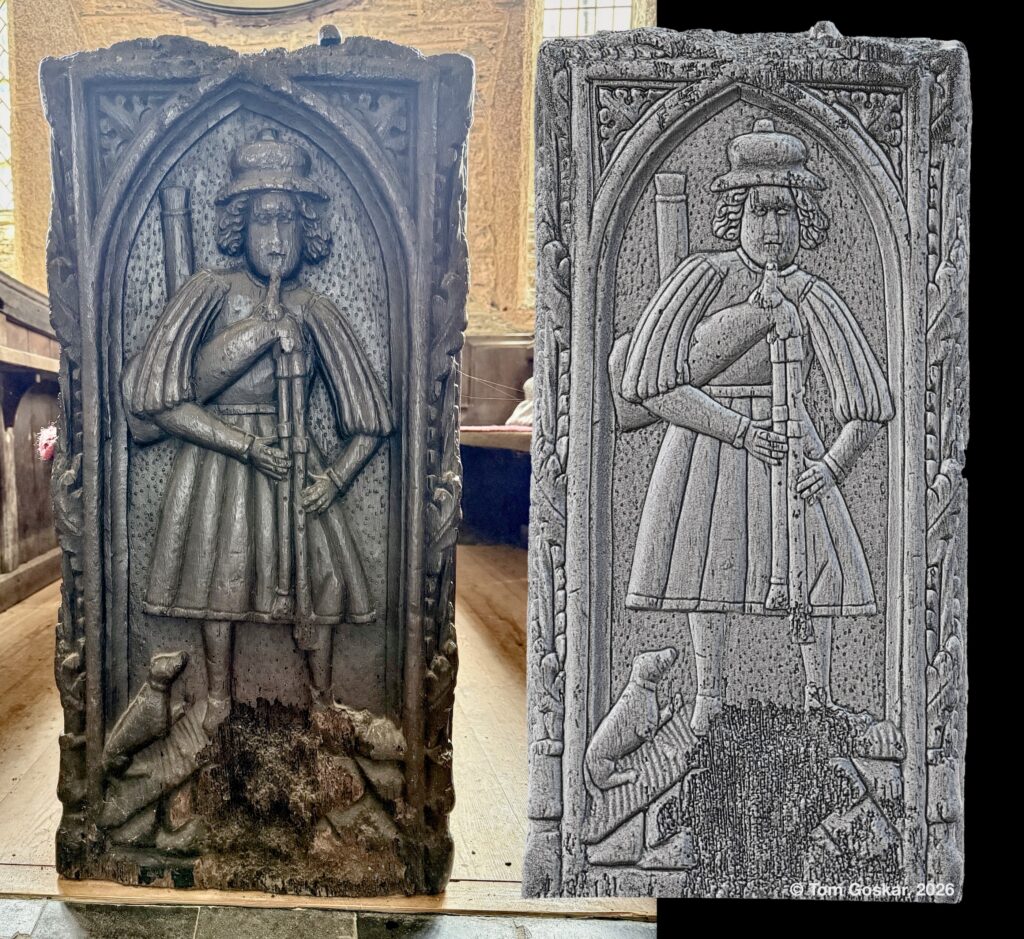
The 3D scan collects millions of measurement points which are then converted into a 3D surface (a mesh). The dark brown colour of the original oak can be disregarded and contrasting colours can be used to reveal the details of the carving. Here, ambient occlusion is used to make the crevices darker, against a pale directional texture called a matcap. A matcap applies a simple material and lighting effect to a 3D scan, making surface details such as scratches, dents and worn edges easier to see. It does not add new detail, but helps reveal the scan’s existing shape by reducing distracting colour and emphasising highlights and shadows.
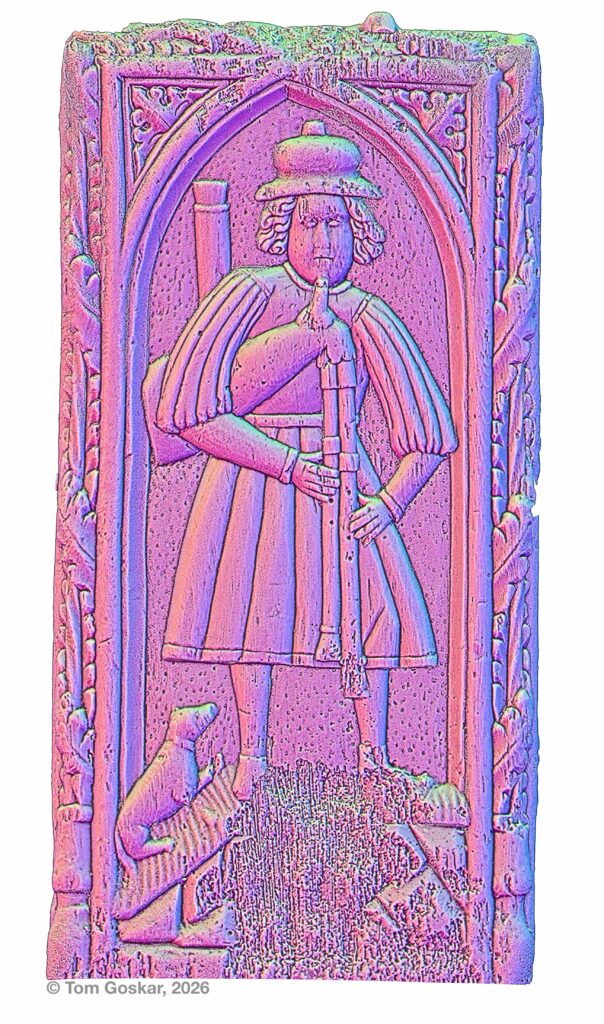
Using a normal map as a matcap can exaggerate changes in surface direction, which often makes the colours look “psychedelic” because different normal directions are mapped to strongly contrasting hues. This deliberate colour separation between opposing surface orientations makes subtle features like scratches, grooves and tool marks stand out more clearly, enhancing the visibility of fine geometric detail without altering the underlying 3D scan. Like the image above, combining this approach with ambient occlusion to fill crevices with darker colours is particularly effective. The woodworm damage (the church are aware of it) can be clearly seen.
Measurements have proved to be incredibly accurate, matching all those taken in the church using a ruler.
For a relatively quick handheld survey, the results were extremely encouraging. The scanner recorded fine carving detail in conditions that would have made photogrammetry slower and more cumbersome, while the resulting models could be measured, relit and examined in ways that are difficult to achieve from photographs alone.
Find out more about me or my 3D scanning services or get in touch to see how I may be able to help with your project in the UK or internationally.